Key Takeaways
- 401k plans and IUL policies offer different features and risks for retirement savings.
- Understanding the facts behind each option helps build an effective, personalized strategy.
Navigating retirement planning often means choosing between various savings tools, such as 401k plans and Indexed Universal Life Insurance (IUL). Each strategy comes with its own mechanics, strengths, and limitations, as well as myths that can cloud objective decision-making. Let’s unpack the facts, compare these options, and address the nuances behind each.
What Is a 401k Plan?
How 401ks Work
A 401k is a workplace-sponsored retirement savings account allowing you to contribute a portion of your paycheck into various investment options. These contributions are typically pre-tax, and investments can grow tax-deferred until withdrawal. Employers may also add contributions to your account, further increasing your savings potential.
Key Features of 401ks
Key features include automated payroll deductions, tax-advantaged growth, and, for many plans, optional employer matching. Investment choices generally range from mutual funds to target-date funds, offering a variety of risk and return profiles. Withdrawals are taxed as ordinary income, and early access is usually restricted without certain exceptions.
What Is Indexed Universal Life Insurance?
Understanding IUL Policies
Indexed Universal Life Insurance (IUL) is a type of permanent life insurance combining a death benefit with a cash value component. Part of your premium helps fund this cash value, which can accumulate over time. Unlike term life insurance, IUL coverage is designed to last throughout your lifetime, as long as the policy is maintained.
Index-Linked Interest Crediting Explained
The defining feature of IUL is its mechanism for earning interest: the policy’s cash value can earn interest based on the performance of a market index (such as the S&P 500), subject to participation rates and interest caps set by the insurer. The principal is not directly invested in the stock market, and most IULs offer downside protection up to a guaranteed minimum.
How Do 401k and IUL Differ?
Tax Treatment Compared
With a 401k, contributions are usually made pre-tax, meaning taxes are deferred until you begin withdrawals in retirement. In contrast, IUL premiums are paid with after-tax dollars. However, the cash value in an IUL can grow tax-deferred, and certain withdrawals (such as policy loans) may be structured to avoid immediate taxation if handled correctly.
Access to Funds
A 401k restricts access to funds until you reach retirement age, with penalties for early withdrawals except under specific circumstances. IUL policies typically offer more flexibility, as you can access the policy’s cash value through loans or withdrawals, subject to policy terms and conditions.
Growth Potential Overview
401ks rely on the underlying performance of the chosen investments, subjecting your savings to both upswings and downturns in the market. IULs potentially offer interest crediting based on a selected market index, with a degree of downside protection but typically with capped upside potential. Neither strategy guarantees specific rates of return.
What Are the Pros of a 401k?
Tax-Advantaged Contributions
One major draw of a 401k is the ability to contribute a portion of your income on a pre-tax basis. This can lower your taxable income for the year and allow more money to compound before taxes are paid in retirement.
Retirement Savings Simplicity
401k plans are relatively straightforward to enroll in and maintain, especially with automatic payroll deductions. For many, an employer match acts as an additional incentive to participate and increase overall retirement savings.
What Are the Pros of IUL?
Flexible Protection Benefits
IUL offers lifelong insurance protection, meaning your beneficiaries receive a death benefit upon your passing, provided premiums are paid. This coverage can support long-term family protection beyond just retirement.
Potential for Tax-Advantaged Growth
The cash value component in an IUL can grow tax-deferred, and some policyholders use loans or withdrawals as a source of supplemental income during retirement years. Tax treatment varies based on how funds are accessed and managed within the policy structure.
What Are the Cons of a 401k?
Limited Access Before Retirement
Funds in a 401k are generally locked until you hit a designated retirement age, with early withdrawals usually facing penalties and taxes. This can be a limitation if you need liquidity before retirement.
Market Volatility Risks
401k balances rise and fall with market performance. Downturns can reduce account values, especially near retirement, affecting the stability of your withdrawal strategy.
What Are the Cons of IUL?
Policy Costs and Fees
IUL policies often have higher costs compared to simple term policies or other savings vehicles. Administrative fees, cost of insurance, and surrender charges can reduce the growth of the cash value, especially in the initial policy years.
Complexity of IUL Structure
These policies are more complex than traditional savings or investment accounts. Understanding participation rates, caps, crediting strategies, and loan provisions requires careful review and ongoing assessment.
Are Common Myths About 401k and IUL True?
Myth: IULs Guarantee Investment Returns
A common misconception is that IUL policies can guarantee specific investment returns. In reality, the credited interest is linked to the performance of an index, but returns are subject to caps and floors set by the insurer. No policy can guarantee a particular rate of growth or eliminate all risk of loss in cash value.
Myth: 401ks Are Always Safer
Some believe that 401ks are inherently safer than IULs. While 401ks are highly regulated and transparent, they are subject to market risk. IULs may offer downside crediting protection, but they come with insurer risk and policy-specific limitations. Both vehicles hold different types of risk and no single strategy is universally “safer.”
Which Option Suits Different Retirement Needs?
Factors to Evaluate
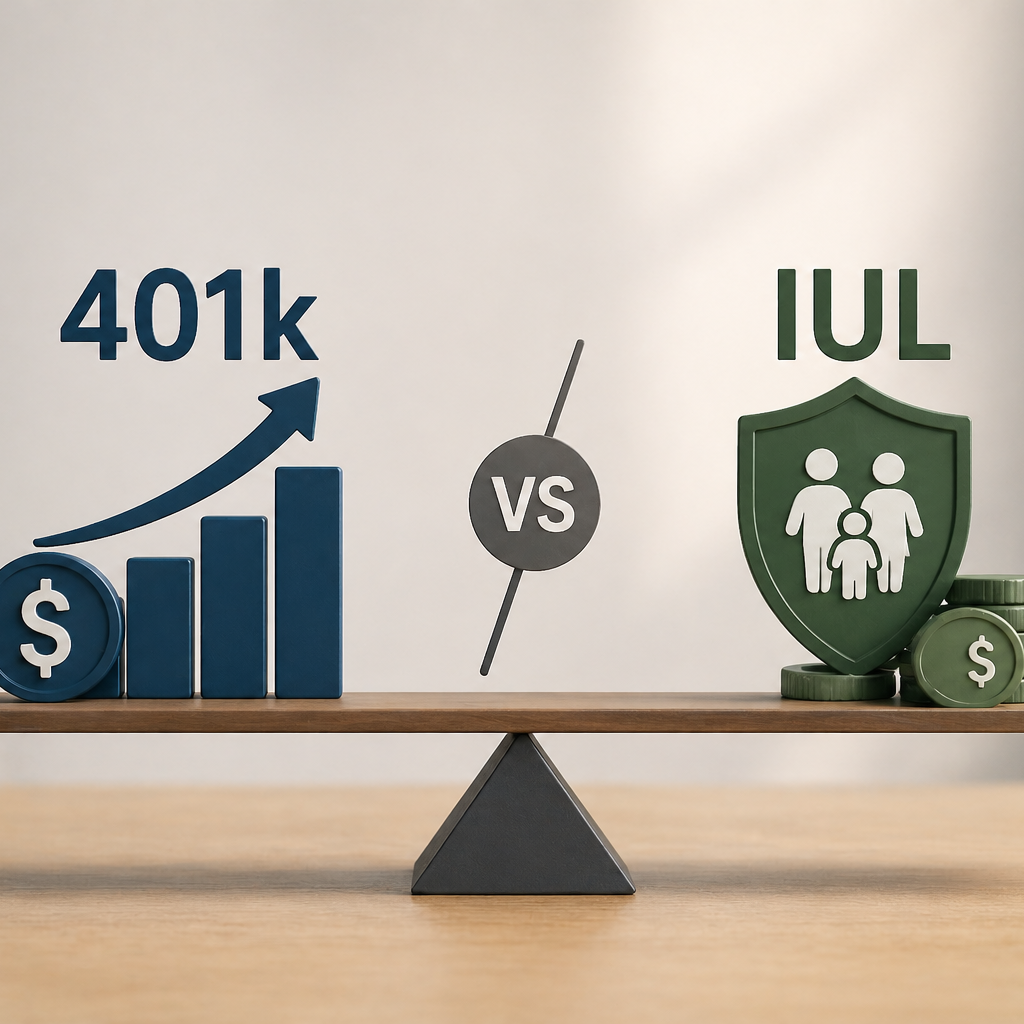
Choosing between a 401k and IUL depends on your retirement timeline, need for flexibility, risk comfort, and protection goals. Consider your preference for guaranteed protection, potential tax advantages, acceptable costs, and how each fits into your overall strategy.
Combining Strategies for Balance
Some individuals use both 401k and IUL as complementary tools—leveraging the tax-advantaged growth and employer match from 401ks while supplementing with the protection and flexible access of an IUL. An integrated approach may address both retirement income needs and legacy planning goals.